A newsletter can appear in a traffic report under several names when one person tags it “Email,” another uses “newsletter,” and a third leaves the link untagged. The campaign ran once; the reporting now looks like several unrelated efforts.
I would solve this with a small naming register rather than a more complicated dashboard. UTM parameters label campaign links. They cannot make an unclear campaign objective or an untested analytics setup reliable.
Choose the fields you will actually use
Google’s campaign URL guidance describes parameters including source, medium, campaign and content, and notes that values are case-sensitive. Define a consistent approach to the main fields before distributing links.
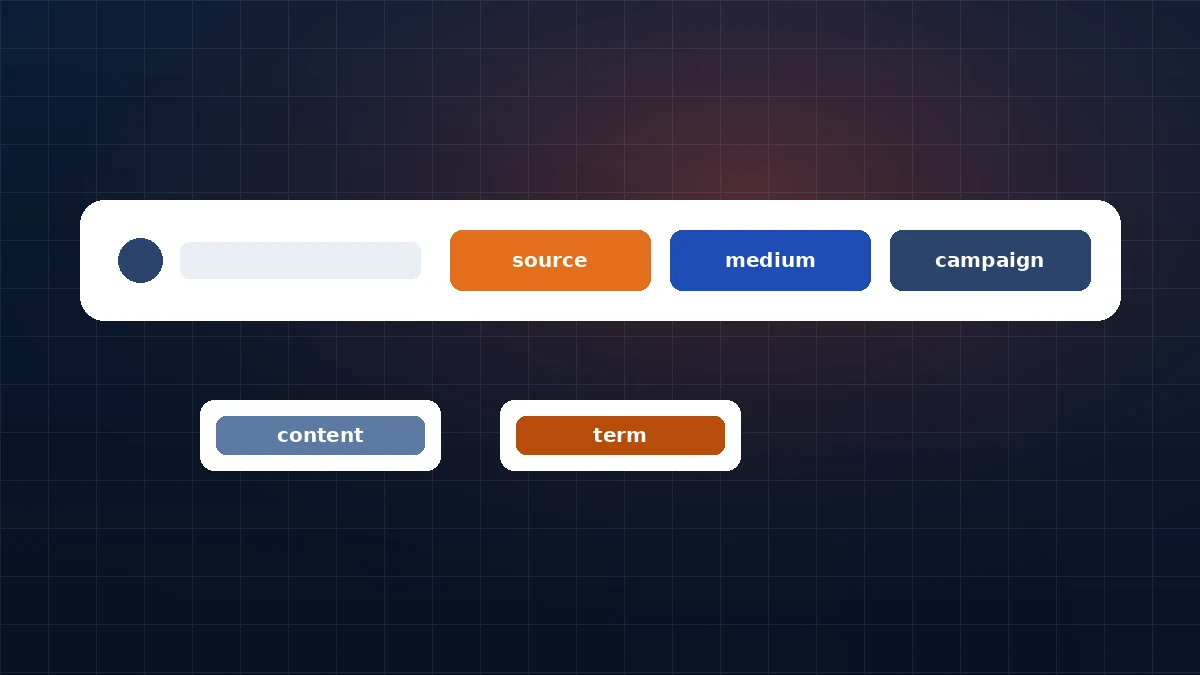
Use source for the specific origin, medium for the channel classification, campaign for the coordinated effort, and content when you need to distinguish placements or creative versions. The exact approved values should fit the platform’s reporting definitions, including its channel-grouping rules.
For example, an illustrative newsletter link might use source=newsletter, medium=email, campaign=maintenance-guide and content=opening-link. The campaign name describes an actual initiative; the content value identifies the placement. Neither should contain a recipient’s name or email address.
Write a short naming standard
Choose lowercase values, a consistent word separator and a rule for dates when dates are useful. Avoid spaces, unexplained abbreviations and labels that will mean nothing to a colleague next quarter. Store approved values in one shared register.
The register should contain the destination URL, source, medium, campaign, content, owner and where the link will appear. Add a plain-language objective, such as “bring newsletter readers to the maintenance guide.” This makes a later traffic spike understandable without reconstructing every email.
Keep the system proportionate. A business with one newsletter and a few campaigns does not need dozens of required fields. Small business marketing planning should make measurement easier to maintain, not create a second administrative job.
Keep personal and sensitive information out of URLs
URLs can be copied, logged and shared. Do not put personal identifiers, customer names, account numbers or confidential deal details into UTM values. Use a general campaign label and keep any permitted customer-level record inside the appropriate controlled system.
A campaign URL is also not a private access mechanism. If a document is confidential, a hard-to-guess parameter does not make it safe to publish. Check the destination’s actual access controls independently of the tracking plan.
Avoid tagging ordinary internal navigation with acquisition UTMs. Those links are not a new external campaign, and the labels can complicate interpretation. Use suitable analytics events or content grouping when you need to understand on-site behavior.
Test the final distributed link
Construct the URL with a proper URL builder or encoding library rather than manually joining strings. Existing query parameters need to be preserved, and special characters must be encoded correctly. Check the final version after any email platform or shortening service has processed it.
Open the link and confirm that it reaches the intended live page, retains the expected parameters through redirects, and does not reveal private information. Then verify the visit in the relevant analytics testing tools, subject to consent and privacy settings. A successful page load alone does not prove the campaign values were recorded.
Website implementation and analytics setup can address that technical handoff. For a new lead-generation campaign, also read the guide to measuring qualified inquiries: a tagged visit is not a qualified lead.
Review consistency before judging performance
After launch, inspect the actual source, medium and campaign values arriving in reports. Look for capitalization variants, accidental duplicates, missing tags and test traffic. Document a correction rule rather than silently combining incompatible campaigns.
Do not promise that every visit will be attributed exactly. Privacy choices, blocked measurement, redirects and later visits can limit what analytics reveals. Report those limits beside the result. If campaign exports need reconciliation, data analytics support can help establish consistent definitions.
Start with the next real campaign, not a retroactive renaming exercise across every old link. Contact Us if you need a naming register and a tested reporting route your team can keep using.