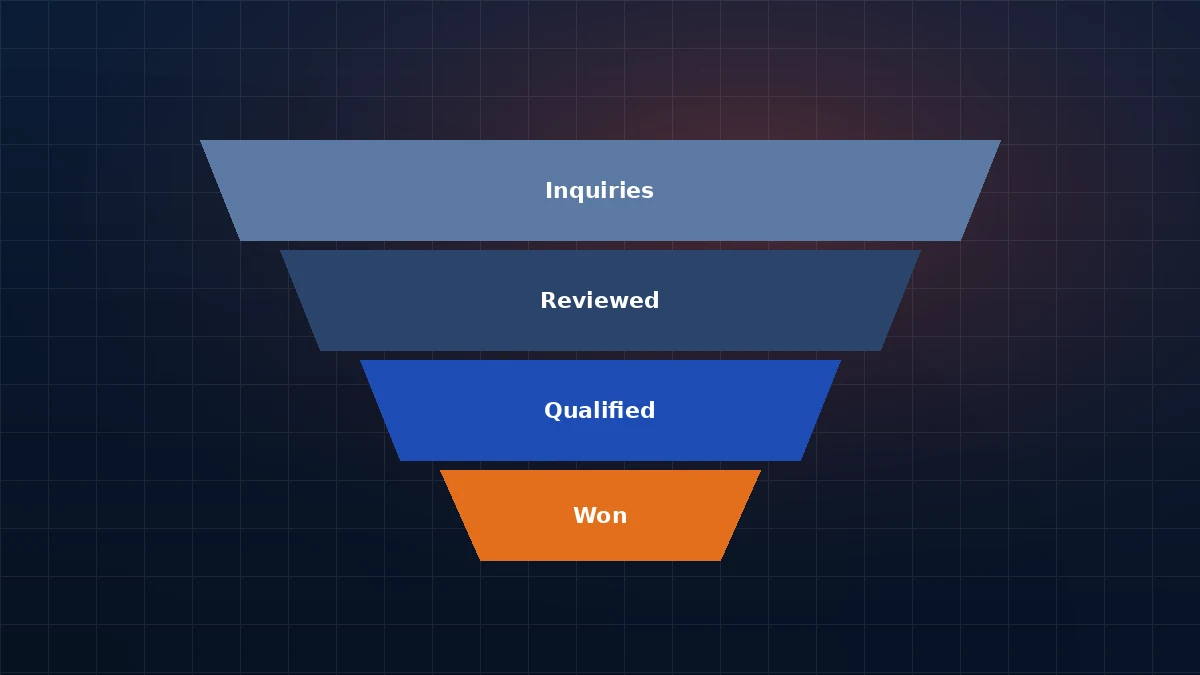
A completed form is an inquiry, not automatically a qualified sales opportunity. If you want useful marketing reporting, define the difference and connect it to a repeatable follow-up process. I would rather see a modest report with clear definitions than a dashboard that counts every submission as a business result.
This guide concerns lead measurement after the visitor acts. It is separate from choosing keywords or improving the form itself.
Write down what qualifies
Start with the business conditions that make an inquiry worth pursuing. These might include service fit, realistic geographic coverage, a genuine need, an identifiable contact and a project the business can actually accept. Qualification should not depend on whether a salesperson happens to like the wording of a message.
Use a small status sequence such as received, reviewed, qualified, proposal sent and closed. Define what evidence is required to move between stages. Include spam, duplicates and unsuitable requests as explicit outcomes rather than silently deleting them from the reporting history.
Illustrative example: a website inquiry asks for work outside a contractor’s license or service offering. It remains a recorded inquiry but does not count as qualified. Another inquiry is in scope but cannot be reached yet; it stays unreviewed or awaiting contact rather than becoming an assumed win.
Keep the event and the business record connected
A measurement event records that something happened on a site. A lead record tracks what the business did afterward. Connect them with an appropriate identifier, not a fragile match on a person’s display name.
Document where each field originates: campaign information from the visit, submission time from the form system, qualification from a reviewer and revenue from the system that records the eventual transaction. Decide which record takes priority when systems disagree.
My data analytics consulting can address those definitions and reconciliation rules. A marketing report becomes more useful when it can explain where its counts came from, rather than merely combining exports.
Avoid placing customer message text or direct identifiers into general analytics reports. Review consent, notices, access and retention with the people responsible for privacy. Technical ability to collect a field is not a sufficient reason to collect it.
Choose advertising feedback deliberately
Google documents offline conversion imports and enhanced conversions for leads, including ways to connect later business outcomes to advertising interactions. Product settings and supported upload methods change, so follow the current documentation for the account rather than an old setup tutorial.
Before enabling an import, answer practical questions. Which stage should feed the platform? Can it be recorded consistently? How will duplicate uploads be prevented? What happens when a lead is later disqualified? Who checks rejected records?
Hashing customer data is not a substitute for permission, appropriate notices or a review of platform terms. Have the relevant privacy and account requirements checked before transmitting customer information. A useful initial report can still be built internally while those questions are resolved.
Reconcile totals before drawing conclusions
Use a review worksheet with a reporting period, inquiry count, duplicate count, reviewed count, qualified count and unresolved records. Explain differences between the form inbox, customer-management system and advertising platform instead of expecting them to match automatically.
Differences may come from timing, attribution rules, filters or missing identifiers. A lead submitted near a period boundary can appear in different reporting windows. Record which date each report uses and avoid treating an attribution disagreement as proof that one system is broken.
For campaign decisions, Google Ads measurement and management should connect to this business process. A provider needs access to meaningful outcomes, but not unrestricted access to every customer detail.
Before calling the setup finished, test a legitimate inquiry, a duplicate, a spam submission and a later status change. Keep the test records clearly labeled. The goal is a trustworthy path from visitor action to business review, not a larger conversion total.
Contact Us to define lead stages and the reporting connections between your website and sales process.